7 Workout Journal App Picks for Easier Logging
 18 min
You want to log workouts consistently, but your training probably doesn't look like anyone else's. Maybe you squeeze in push-ups between calls, lift at a commercial gym with your phone on a bench, or bounce between an iPhone, watch, and laptop. In each case, the right workout journal app is the one that matches how you train, not the one with the longest feature list.
That matters because motivation is often the problem, not just record-keeping. In a national survey, 58.23% of adult smartphone owners had downloaded a health app, 52.8% of those users downloaded one to track physical activity, 65% reported that health apps improved their health, and 92% of current health-app users said those apps were very or somewhat helpful, according to the JMIR mHealth and uHealth study on health app use. This roundup stays practical. It compares seven apps by logging speed, social sharing, programming support, platform access, analytics, pricing transparency, and whether they fit gym training or quick at-home sessions.
The list uses only the supplied product details. Each pick serves a different logging style, so the best choice depends on your workflow.
Table of Contents
- 1. SuperStrong
- 2. Strong Workout Tracker and Gym Log
- 3. Hevy Workout Tracker and Gym Logger
- 4. JEFIT Workout Planner Gym Log
- 5. Fitbod Gym and Fitness Planner
- 6. StrengthLog Free Workout Tracker
- 7. RepCount Gym Workout Tracker
- Top 7 Workout Journal Apps, Feature Comparison
- Match the App to Your Logging Habit
1. SuperStrong
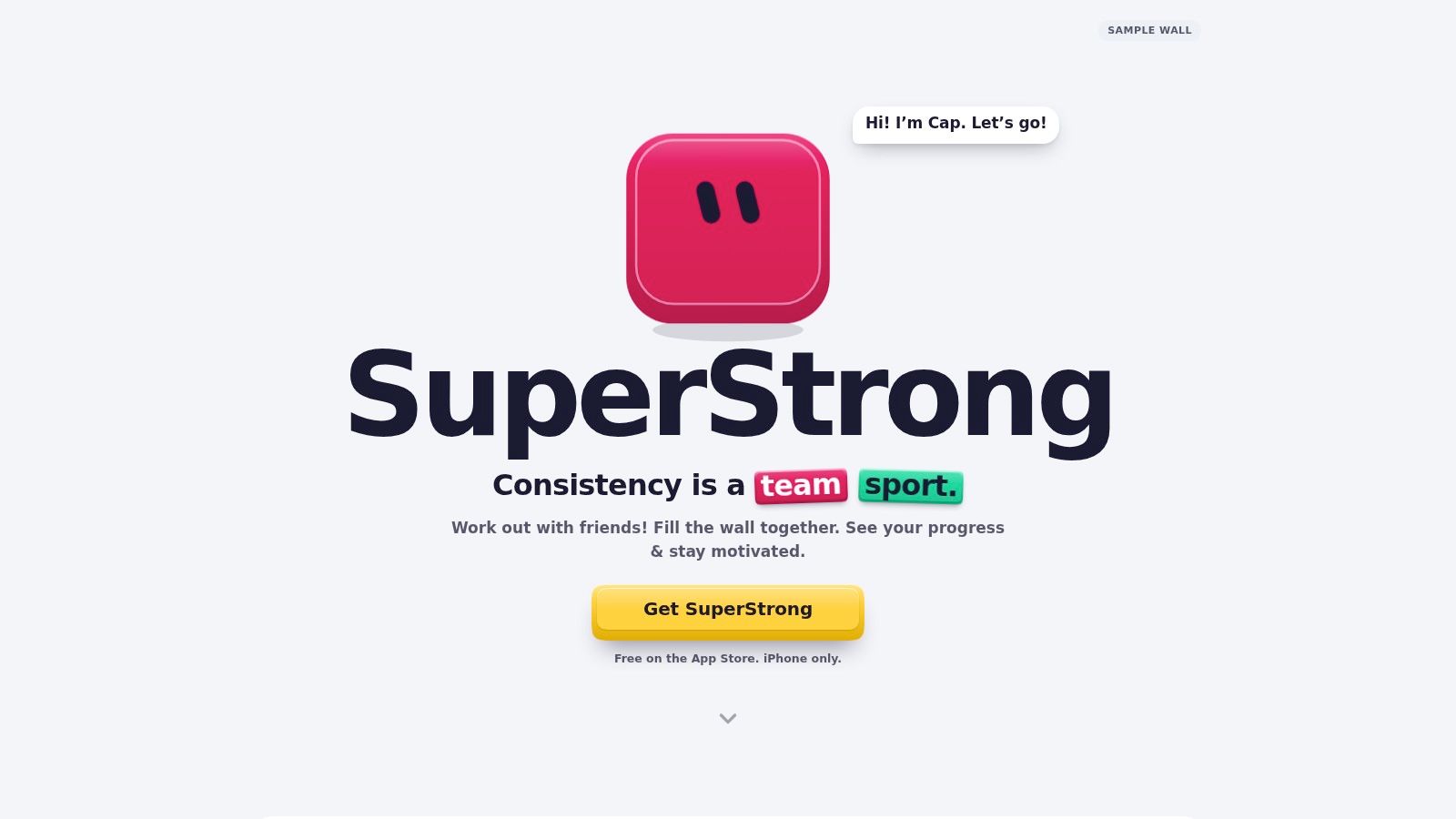
You finish a meeting, have six spare minutes, and know a full workout is not happening. SuperStrong is built for that exact training habit. It is an iPhone-only workout journal app for quick at-home bodyweight sets, with a small social layer that keeps you accountable without turning logging into a project.
SuperStrong stands apart because it treats consistency as the main job. You are not building complex lifting sessions or reviewing dense dashboards. You are recording push-ups, pull-ups, squats, dips, glute bridges, rows, bird dogs, and simple home variations such as chair dips or doorframe pull-ups, then seeing that work stack up in a format that feels immediate.
Best for micro-workout accountability
Pick SuperStrong if your biggest obstacle is starting. It favors fast entry over planning depth, which makes it a strong match for busy professionals, beginners, and anyone training in short bursts at home.
The visual wall is the reason to use it. Each set becomes a tile, and higher rep counts create larger tiles. You can scan days, weeks, months, or a full year and see whether you are showing up.
Practical rule: If you skip training because a full session feels too hard to start, use an app that gives a single set real weight.
Where it fits best
SuperStrong is the right call for a specific workflow. Log a few sets quickly. Share them with a small group. Get a visible record of consistency.
Its social features support that loop well. The shared wall, NEW PR badges, and one-tap sticker reactions give you enough feedback to stay engaged, while the four-friend limit keeps the experience private and focused.
Use SuperStrong if these trade-offs match how you train:
- Choose it for fast bodyweight logging: It is made for quick set entry, not detailed workout building.
- Choose it for visible consistency: The tile wall makes repeat effort easier to notice than a table of numbers.
- Choose it for small-group accountability: Up to four friends is enough for encouragement without the noise of a large community.
Skip it if your workflow depends on broader access or heavier analysis:
- Skip it for Android or web access: It is limited to iPhone.
- Skip it for advanced analytics: The app focuses on visual progress and accountability, not deep reporting.
- Skip it for large social communities: The social loop is intentionally small and private.
You can check the app directly at SuperStrong's official website.
2. Strong Workout Tracker and Gym Log
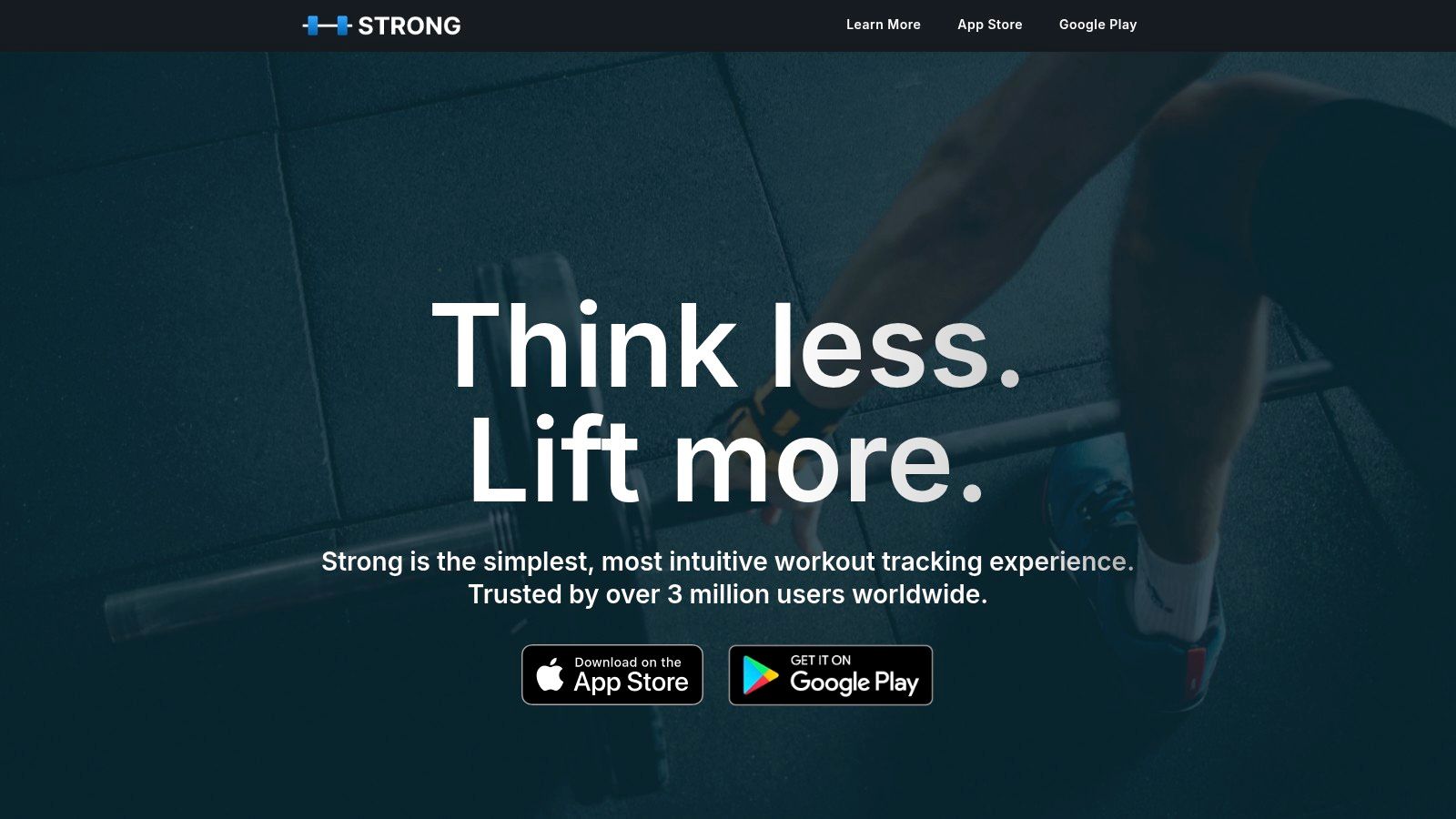
Strong is the cleanest pick for lifters who want their workout journal app to behave like a fast digital notebook. It's built around quick set entry, clear progress views, and enough structure to support serious strength training without turning every workout into a planning project.
This is the app I'd point to first for gym users who care most about mid-session speed. Superset support, a exercise library, custom exercises, RPE support, timers, charts, and a muscle heat map all serve the core task of logging efficiently.
Best for frictionless gym logging
Strong works across iPhone, Android, and Apple Watch with cloud sync, which makes it a practical choice if you train across multiple devices. It also offers CSV export, which matters if you want to keep a copy of your training history outside the app.
Its real appeal is restraint. You open it, log the work, review progress, and move on. That's better than feature-heavy apps if your training plan already exists in your head or with a coach.
Strong is the right choice when you want the app to stay out of the way while you train.
Trade-offs to accept
Strong isn't built around social motivation. If seeing friends' workouts or getting reactions keeps you engaged, this won't give you much.
A few practical reasons to choose it:
- Pick Strong for set-entry speed: It's one of the better fits for fast in-gym use.
- Pick Strong for pure journaling: The notebook-style feel suits lifters who don't want coaching layers.
- Pick Strong for data portability: CSV export is useful if you don't want your history trapped.
Its main drawback is pricing transparency. The PRO tier exists, but pricing is shown in app stores rather than clearly published on the marketing site. Visit Strong's official site if the core logging workflow sounds right.
3. Hevy Workout Tracker and Gym Logger
You finish a session, open your log, and end up checking what your training partners did first. That habit points to Hevy.
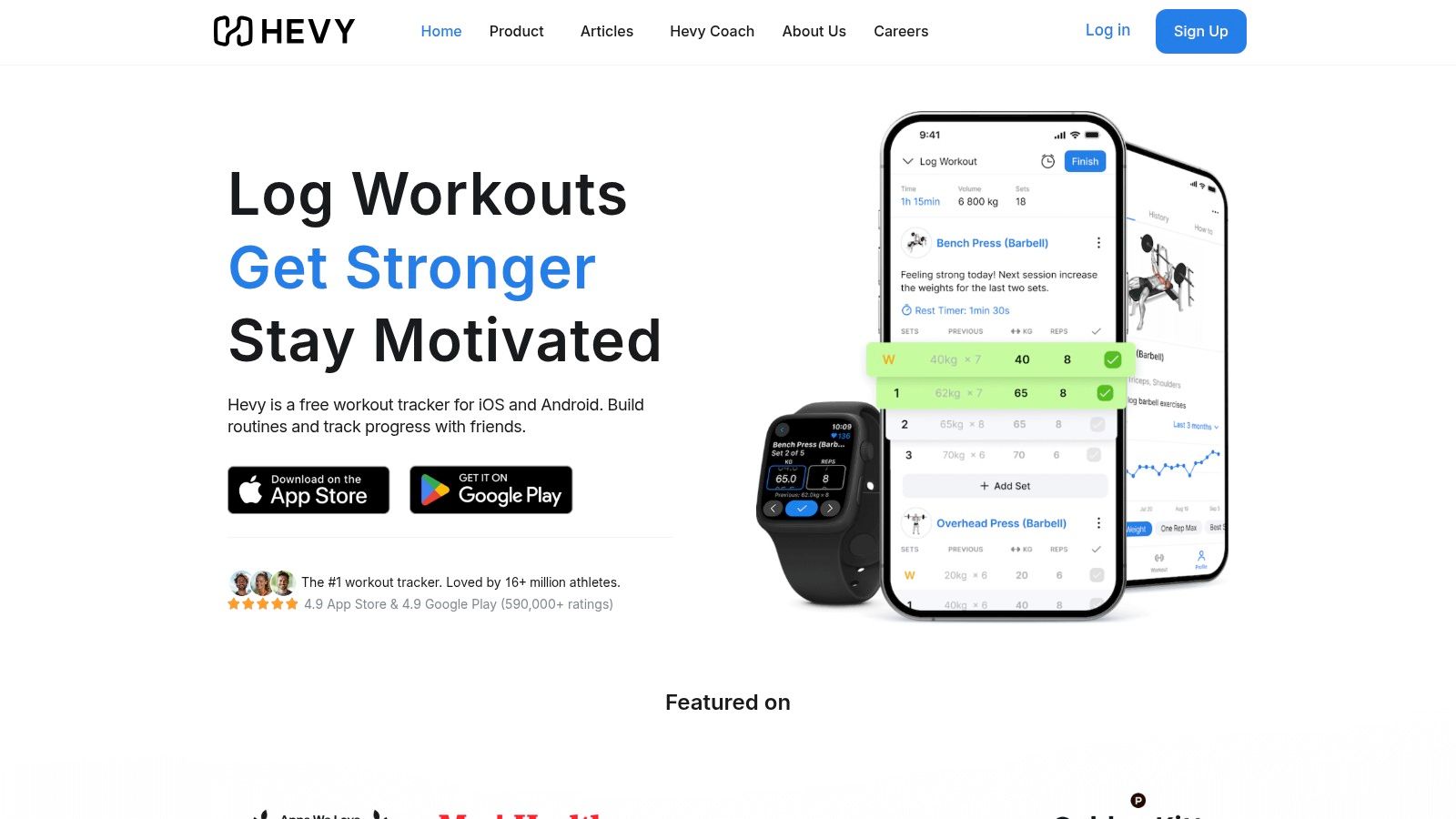
Hevy is the pick for lifters who want their workout journal app to keep them accountable in public, not just store sets in private. It combines straightforward strength logging with a social feed, comments, routine planning, and a full desktop web app. That mix gives it a clear role in this roundup. Hevy is less about pure logging speed than Strong, and less about all-in-one planning depth than JEFIT. It sits between them and works best if consistency improves when other people can see your training.
Best for social motivation with a real training log
The social feed is the reason to choose Hevy. If likes, comments, and seeing friends train make you show up more often, Hevy matches that behavior better than a private notebook-style tracker. That matters more than extra charts for users who already know their program but need a stronger accountability loop.
Platform access is another practical advantage. Hevy works on iOS, Android, web, and Apple Watch, so you can log on your phone, review training on a larger screen, and keep your routine accessible across devices without changing apps.
A few clear reasons to pick it:
- Pick Hevy for social accountability: Friends' activity and comments add pressure to stay consistent.
- Pick Hevy for mixed-device use: Phone, watch, and desktop access suits lifters who do not want to manage everything on one screen.
- Pick Hevy for moderate planning needs: Routine creation is useful without pushing you into a heavier planner workflow.
Trade-offs to accept
Hevy is strongest for strength training habits built around shared momentum and regular check-ins. It is a weaker fit if your top priority is the fastest possible set entry or deeper support for endurance-focused logging.
Pricing is also less transparent than it should be. You will need to check the app for exact premium costs in your region. Visit Hevy's official website if you want a workout journal app built around accountability first and private logging second.
4. JEFIT Workout Planner Gym Log
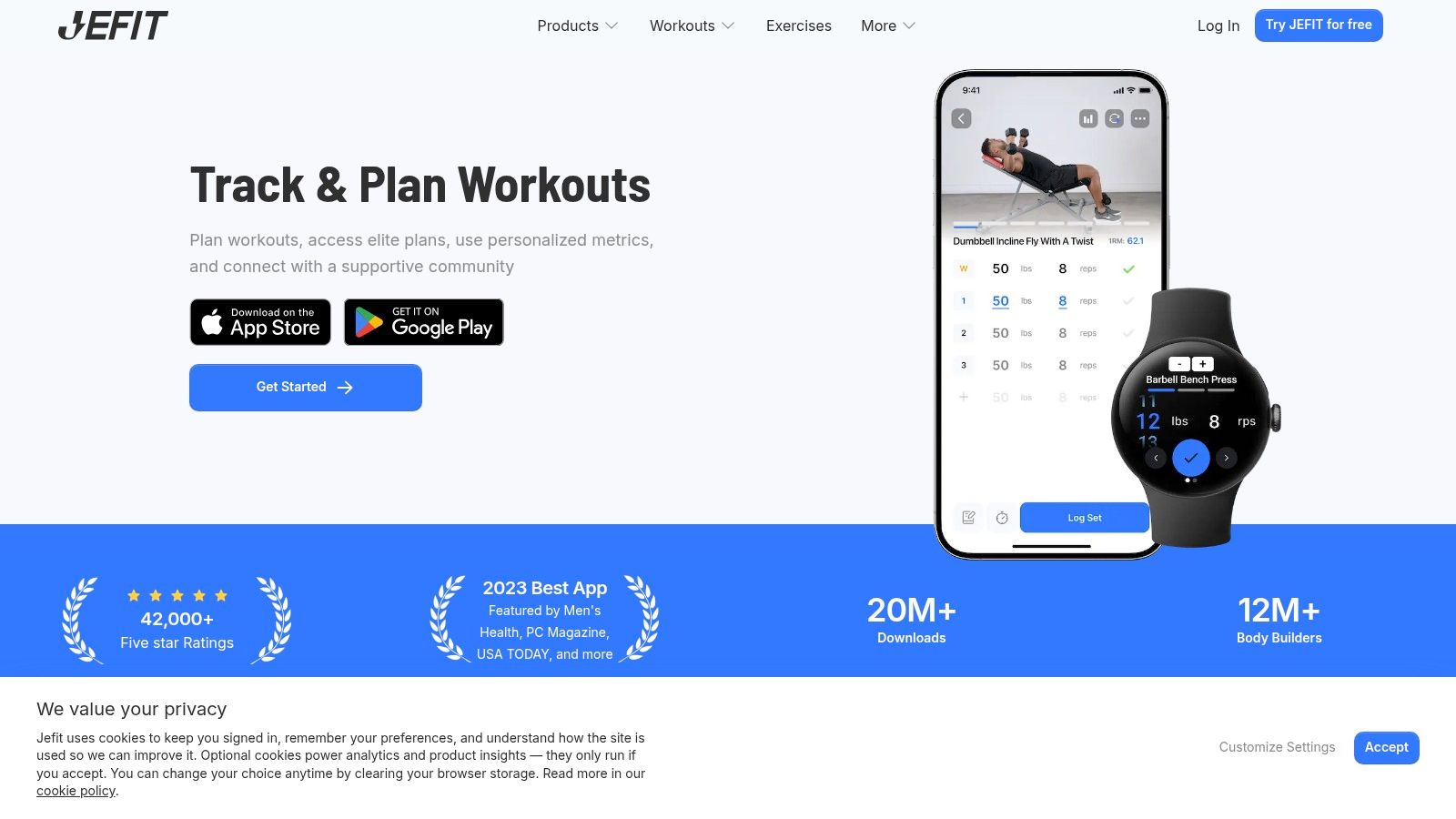
JEFIT is for the person who wants one app to do almost everything around lifting. It combines a large exercise library, workout history, planning tools, analytics, community access, and web support. If simpler loggers feel too bare, JEFIT will probably feel more complete.
Its library includes 1,400+ exercises, which is a practical advantage for people who rotate movements often, follow bodybuilding-style splits, or like having plenty of exercise ideas inside the same app. That breadth is one of the clearest reasons to choose it over a lighter tracker.
Best for planning depth and exercise variety
JEFIT suits users who don't just want to record what happened. They want routines, history, community, and richer review tools in the same place. The web app also helps if you prefer building or reviewing training plans on a computer instead of doing everything on your phone.
There's a free Basic tier and a paid Elite tier, so you can start without paying right away.
If you need your logger to double as a workout library and planning hub, JEFIT makes more sense than a minimalist app.
Why some people should avoid it
The trade-off is interface weight. JEFIT is less ideal if you want a quick notebook-style logger with minimal taps and a calmer screen. Some features also sit behind the Elite subscription, including the fuller analytics experience and Apple Watch support.
Choose JEFIT if these priorities match:
- Pick it for exercise breadth: The library is one of its biggest strengths.
- Pick it for community plus planning: It does more than simple logging.
- Pick it for long-term organization: Web access helps with review and setup.
If that sounds like your style, go to JEFIT's official website.
5. Fitbod Gym and Fitness Planner
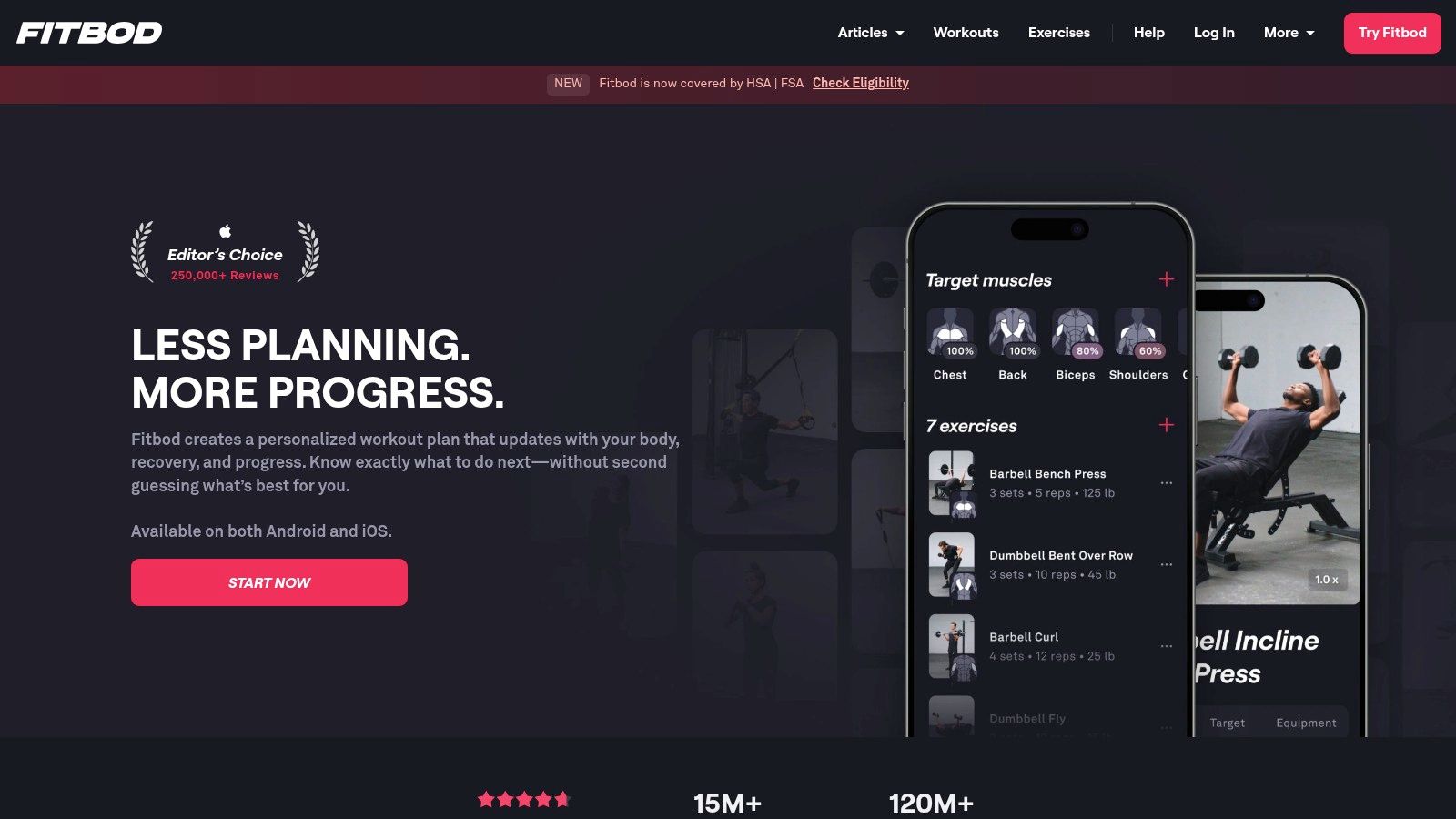
Fitbod is the strongest choice here if planning is your bottleneck, not logging. It builds workouts based on your training history, goals, and available equipment, then lets you log sets, weights, and PRs inside the same system. That makes it more of a guided training app with journaling built in.
For busy users, that's a real advantage. You don't have to decide what to do every session before you can start tracking it.
Best for people who want the app to build the workout
Fitbod works on iOS, Android, and Apple Watch. It also includes video demos, which can be useful if you train alone and want quick refreshers while moving through a session.
This is the recommendation for users who like structure and don't want to build every day's plan from scratch.
- Choose Fitbod to remove planning friction: It tells you what to do next.
- Choose Fitbod for integrated logging: You still get a detailed record while following generated sessions.
- Choose Fitbod if your equipment varies: It's built to adapt around what you have available.
What you give up
Fitbod isn't the best social journaling choice. If accountability comes from friends, comments, or shared progress, Hevy or SuperStrong will feel more motivating.
Its pricing is also handled through app stores or a Fitbod account rather than being prominently displayed on the marketing site. You can review the platform at Fitbod's official website.
6. StrengthLog Free Workout Tracker
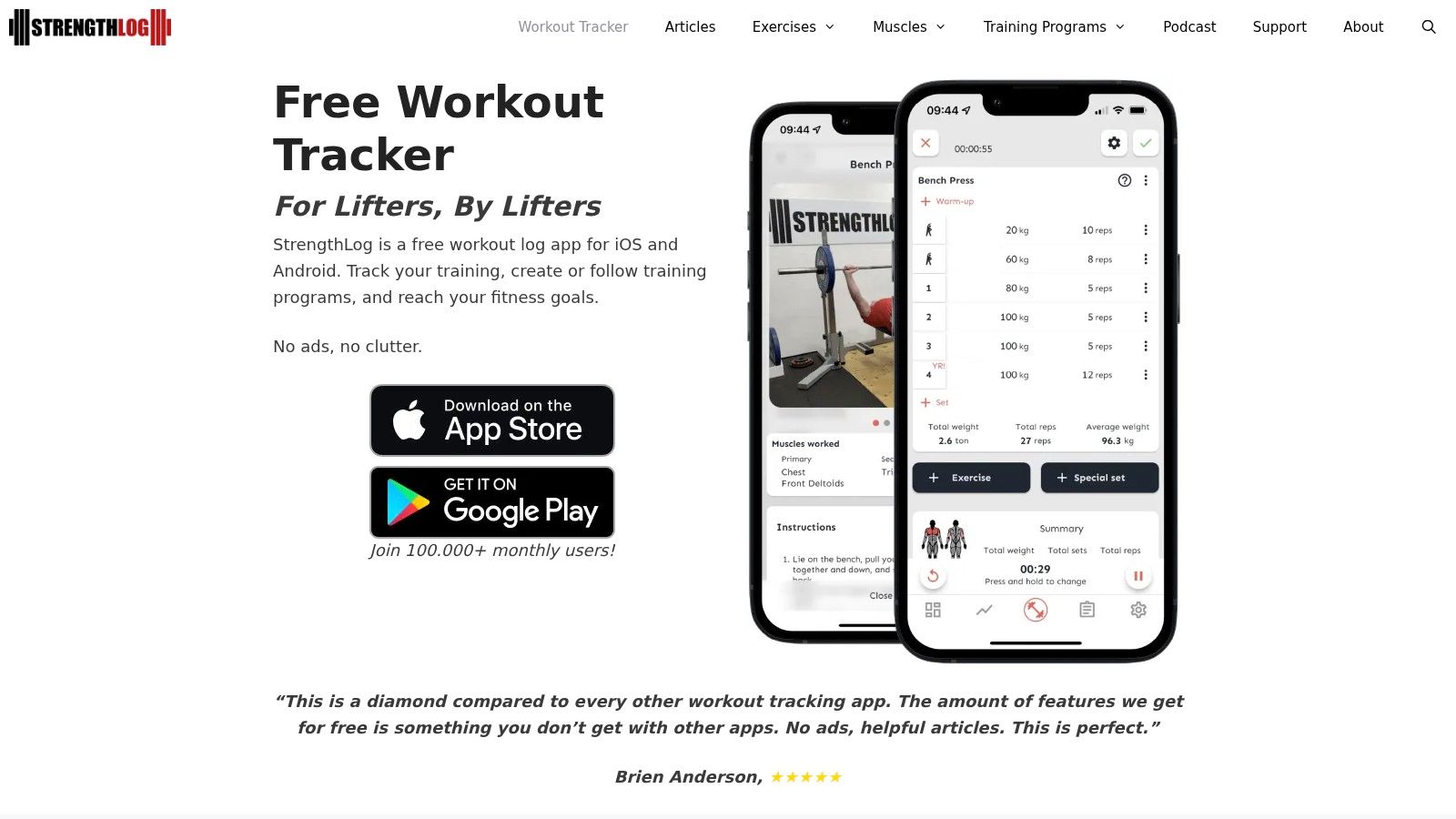
StrengthLog earns its spot because it offers a generous free baseline while still giving strength-focused users a path to more detailed analysis later. If you want a capable workout journal app without paying upfront, it's one of the easiest to recommend.
It supports iOS, Android, and Apple Watch, with core logging available for free and optional Premium features for more advanced metrics, reports, and programs.
Best for a strong free starting point
The app is built around lifting. If your routine revolves around sets, reps, and progressive training rather than cardio coaching, StrengthLog's focus makes sense.
Premium adds items like RPE and RiR support plus fuller reports, but the free version remains useful enough to stand on its own. There's also a 14-day Premium trial if you want to test the extra analysis.
Don't upgrade based on feature lists. Upgrade only if the app helps you review and improve actual training decisions.
Who should pick it
StrengthLog works well for lifters who want more depth than a bare-bones tracker but don't want to commit to a paid plan immediately.
- Pick StrengthLog for free core logging: It gives you a real baseline before asking for money.
- Pick it for strength analytics: Premium is aimed at serious lifting review.
- Pick it for cross-device access: Phone and watch support add convenience.
The limitation is similar to several others here. Exact Premium pricing appears in app stores and can vary by region. Explore it through StrengthLog's official website.
7. RepCount Gym Workout Tracker
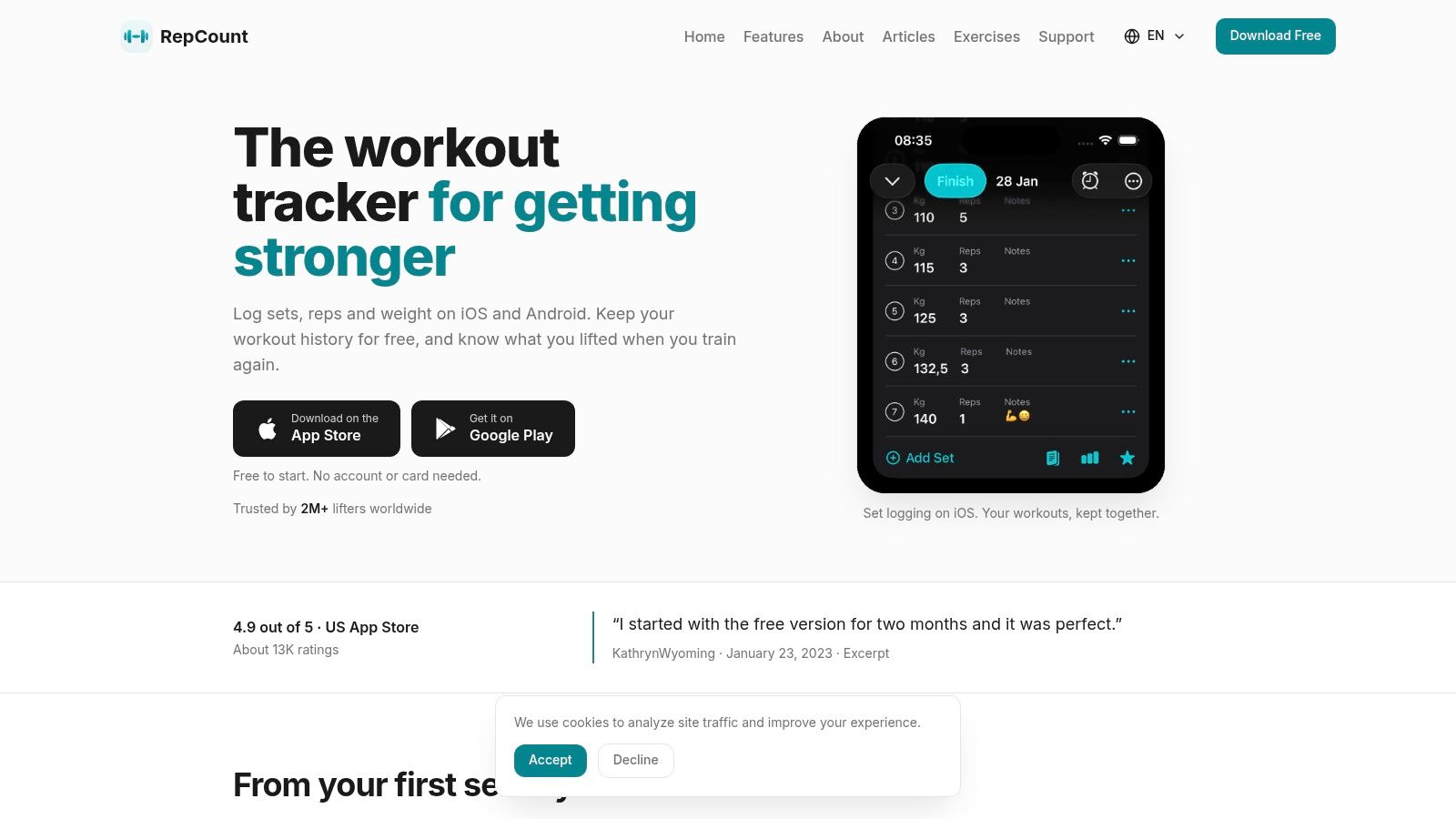
RepCount is the straightforward recommendation for people who want speed, clarity, and transparent upgrade decisions. It offers unlimited workouts, routines, and custom exercises for free, plus cloud sync, Health integrations, and offline use. That makes it one of the most practical no-nonsense picks in this list.
The app also separates its Premium features cleanly. If you need charts, PR tables, supersets, drop sets, and CSV export, you can see what the paid tier adds without guessing.
Best for transparent free-plan value
RepCount is available on iOS, Android, and Apple Watch. That broad support matters if you don't want to get locked into one phone platform or if you like logging from a watch during gym sessions.
What sets it apart isn't flashy programming or social features. It's clear value and fast core journaling.
- Choose RepCount for free unlimited basics: You can build routines and custom exercises without immediate paywalls.
- Choose RepCount for transparent upgrades: The feature breakdown is public and easy to understand.
- Choose RepCount for practical logging: It's built to record training fast.
Its main limitation
RepCount doesn't include a built-in social feed, so motivation has to come from your own habits or training environment. It also keeps coaching and programming relatively light compared with planner-style apps like Fitbod or JEFIT.
One broader reason this matters is retention. A 2026 analysis of fitness app behavior reported adherence values ranging from 1.2% to 166.7%, according to the JMIR study on fitness app adherence and sustainment. Logging tools don't just need to work on day one. They need to stay easy enough that you keep using them after the novelty wears off. RepCount's simplicity helps on that front.
If that sounds like your style, visit RepCount's official website.
Top 7 Workout Journal Apps, Feature Comparison
| App | 🔄 Complexity | ⚡ Speed / Ease | 📊 Expected Outcomes | 💡 Ideal Use Cases | ⭐ Key Advantages |
|---|---|---|---|---|---|
| SuperStrong | Low, minimalist feature set | Very fast, one‑tap logging for micro‑sets | Higher adherence to micro‑exercise; visible cumulative progress | Busy professionals, beginners, small friend groups wanting lightweight accountability | Visual shared wall, effort-as-mass tiles; social but low-noise |
| Strong, Workout Tracker & Gym Log | Moderate, focused journal features | Extremely fast mid‑workout logging | Reliable, precise strength logs for progress tracking | Lifters who want a pure, fast workout journal (cross‑platform) | Fast logging, robust library, export options |
| Hevy, Workout Tracker & Gym Logger | Moderate, logging + social + web | Fast logging with social feed | Improved consistency via social motivation and planning | Users who want social accountability + desktop review | Social feed, routine planning, full web app |
| JEFIT, Workout Planner Gym Log | High, extensive library and analytics | Moderate, heavier UI and many features | Comprehensive planning, deep analytics and community support | Users seeking guided plans, large exercise library, community | Huge exercise library, advanced analytics, web community |
| Fitbod, Gym & Fitness Planner | High, adaptive algorithm and program generation | Fast for users who accept auto‑programming | Personalized training sessions and steady progression | Users who want guided, adaptive programming with integrated logging | Adaptive auto‑programming based on history and equipment |
| StrengthLog, Free Workout Tracker | Moderate, solid logging + analytics behind paywall | Fast logging; cross‑device sync | Strong strength analytics when upgraded; good free baseline | Users who want a capable free tracker with upgrade path | Generous free tier; detailed metrics in Premium |
| RepCount, Gym Workout Tracker | Low‑Moderate, minimalist core, premium analytics | Very fast, streamlined free logging | Reliable simple journal; richer analytics if upgraded | Minimalists who want transparent pricing and quick logging | Unlimited free logging, transparent pricing, Health integrations |
Match the App to Your Logging Habit
There isn't one best workout journal app for everyone. The right pick depends on what usually stops you from logging in the first place. If you need social visibility for short at-home bodyweight sets, SuperStrong is the clear recommendation for iPhone users. It's simple, fast, and built around small shared accountability rather than long gym sessions.
If your priority is pure logging speed in the gym, Strong and RepCount are the two cleanest choices. Strong feels more like a mature lifter's notebook with strong device support and export options. RepCount stands out for its transparent free plan and uncomplicated upgrade path.
Hevy is the best fit when social sharing keeps you consistent across devices. JEFIT makes more sense if you want a large exercise library, broader community features, and planning depth inside the same app. Fitbod is the one to choose if deciding what to train is the hardest part, because it combines guided workout generation with built-in logging. StrengthLog is a smart middle ground for lifters who want a solid free starting point and the option to add strength-focused analytics later.
One final point matters if you're considering very short sessions. A 2026 review of exercise snacks found growing support for short, practical movement bouts with strong acceptability, while effects were more mixed across some strength and cardiometabolic outcomes, according to the PubMed review on exercise snacks and outcomes. That's a good reminder to match the app to the kind of training you'll sustain, not the ideal routine you keep postponing.
Before you choose, define five things: where you train, how fast entry needs to be, whether you need social accountability, which devices you use, and how much analysis you'll really review. Then test the app against one simple standard. Does it make logging your next workout easier, or does it turn training into more admin?
If you want a workout journal app that makes short home workouts easy to log and hard to ignore, SuperStrong is built for that exact job. It gives iPhone users a shared wall for quick bodyweight sets, visible progress, and lightweight accountability with a few friends. See how it works at SuperStrong.
Powered by Outrank tool