Under Desk Exercise: 8 Moves You Can Do at Work
 17 min
Your calendar is full, lunch is happening beside the keyboard, and the workout you planned now depends on a free evening that probably won't appear. You don't need to turn your office into a gym. You need a small movement you can finish before the next task starts.
Under desk exercise works best as a repeatable habit, not a collection of moves you try once. Treat each short set as an exercise snack: choose a movement, perform it with control, then record what you completed. Keep demanding work separate from the set so neither your technique nor your concentration suffers.
The eight moves below range from discreet calf raises to gentle torso rotations and resisted presses. Each includes an easier starting point, a harder variation, and a logging cue. Use a stable chair, clear cables and bags from your feet, and check that your knees have room beneath the desk. These are movement opportunities, not a replacement for walking or a broader strength programme.
Table of Contents
- 1. Seated Leg Extensions
- 2. Seated Calf Raises
- 3. Seated Marches
- 4. Seated Hamstring Curls (Heel Slides)
- 5. Isometric Thigh Squeeze
- 6. Seated Torso Twists
- 7. Seated Hip Abduction Press
- 8. Under-Desk Isometric Press
- Under-Desk Exercises at a Glance
- Turning Under-Desk Moves Into a Daily Habit You Can See
1. Seated Leg Extensions
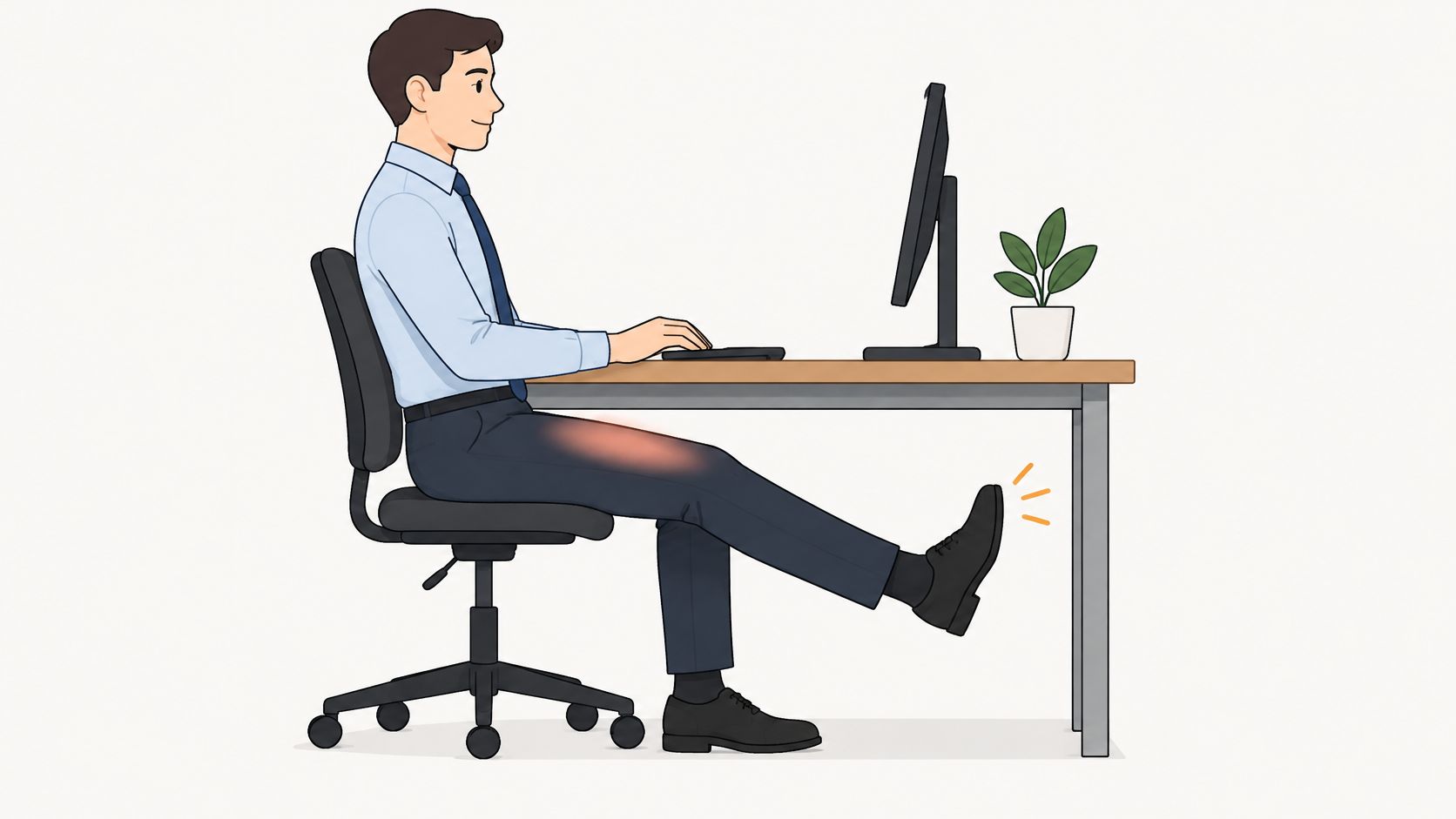
Start with leg extensions when you want a quiet movement without equipment. Sit with your back supported, let your shoulders relax, and plant your feet beneath your knees. Straighten one knee until your leg is straight or comfortably close to it, pause, then lower your foot without dropping it.
The work should come from the front of your thigh, not from rocking backward. Keep your thigh supported on the seat and avoid snapping the knee into a locked position. If the desk blocks your shin, move the chair back before starting rather than twisting your leg around an obstacle.
Scale the effort without swinging
- Make it easier: Lift through a smaller comfortable range and return your foot to the floor between repetitions.
- Make it harder: Pause longer near the top and slow the lowering phase while keeping your torso still.
- Log the snack: Record repetitions for each leg separately so a stronger side doesn't hide what the other completed.
A useful trigger is finishing an email batch: take your hands off the keyboard, complete the set, then log it before opening another task. Stop while you can still lower smoothly. If you need momentum, the set has gone beyond useful control.
This is a modest quadriceps exercise, not a treatment for knee pain. Reduce the range if it feels uncomfortable, and stop rather than pushing through sharp or increasing symptoms. Someone already comfortable with loaded leg training may find it too easy for strength development, but it can still provide a deliberate movement break.
2. Seated Calf Raises
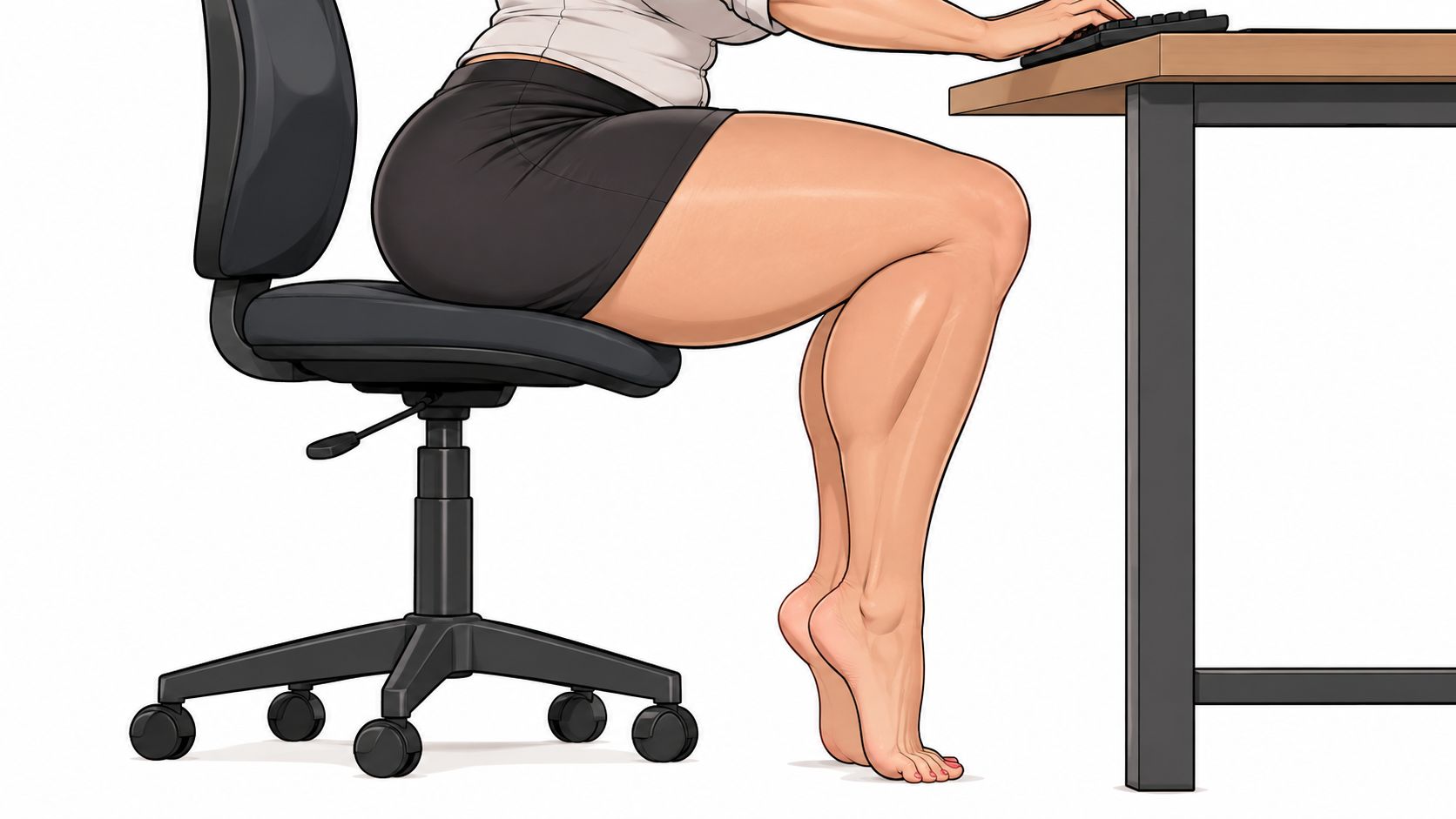
Calf raises are practical when desk clearance is tight because your knees barely need to move. Keep the balls of your feet on the floor, lift your heels, and lower them slowly. Choose footwear that lets your feet stay stable, rather than balancing on a narrow heel or slippery sole.
You'll feel the calves contract as your heels rise. Don't turn the movement into bouncing your knees or tapping your toes. A controlled pause at the top and a quiet return to the floor make a light exercise more deliberate.
Practical rule: If your chair rolls backward, fix the setup before adding effort. Exercise shouldn't depend on chasing your seat across the floor.
For an easy starting point, raise both heels together through a comfortable range. To make it more demanding, work one side at a time and use light downward pressure from your hand on that thigh. Keep the pressure manageable enough that you can still lower the heel smoothly.
Pair the set with a predictable pause
Use calf raises after returning from lunch, before you resume typing. Record completed repetitions and whether you used both feet together or alternated sides; those are different versions and shouldn't be treated as interchangeable progress.
If you want a separate calf mobility option away from your chair, use our downward dog calf stretch guide. Stretching and calf raises serve different purposes, so don't substitute a longer stretch for progressively controlled muscle work.
Calf raises also aren't a remedy for unexplained leg swelling or pain. New or concerning symptoms deserve medical attention, not a harder desk routine.
3. Seated Marches
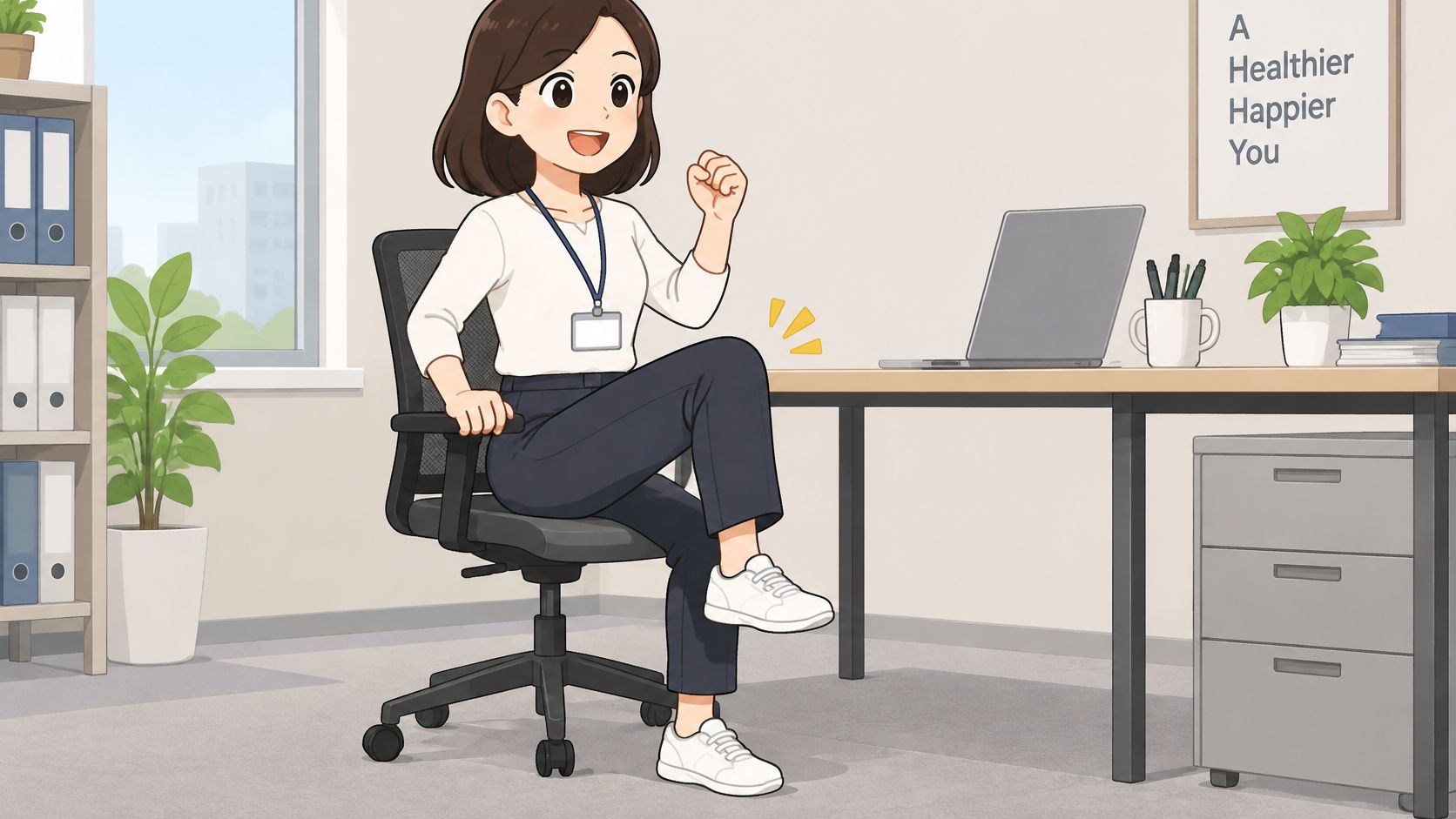
Say you've finished a video call and have another task ready to open. Instead of immediately clicking into it, sit upright and alternate lifting your feet in a gentle marching rhythm. Raise each knee only as far as you can without leaning backward or hitting the desk.
Small and steady beats high and awkward. Keep your feet quiet as they return to the floor, and don't pull on the armrests to lift your legs. If you need more room, slide back from the desk while keeping the chair stable.
- Beginner version: Lift each foot just clear of the floor, with a brief reset between sides.
- More challenging version: Maintain a continuous rhythm and add relaxed arm swings when you're clear of the keyboard.
- Logging habit: Record the bout's duration and whether you included arm movement, rather than guessing how much work you did.
Seated marching is an accessible movement option, but it shouldn't inherit every benefit demonstrated for walking breaks. In adults with obesity, a systematic review and meta-analysis in Frontiers in Nutrition found that interrupting sitting about every 30 minutes with 2–5 minutes of light-to-moderate walking or simple resistance exercise acutely improved post-meal glucose and insulin responses.
That finding doesn't establish the same effect for seated marches or prove lasting benefits. When you can leave the chair, include actual walking rather than making every break seated.
For more ways to match a short movement bout to your surroundings, explore these exercise snack examples. Choose a version you can repeat comfortably, not one that makes you rush to recover before your next call.
4. Seated Hamstring Curls (Heel Slides)
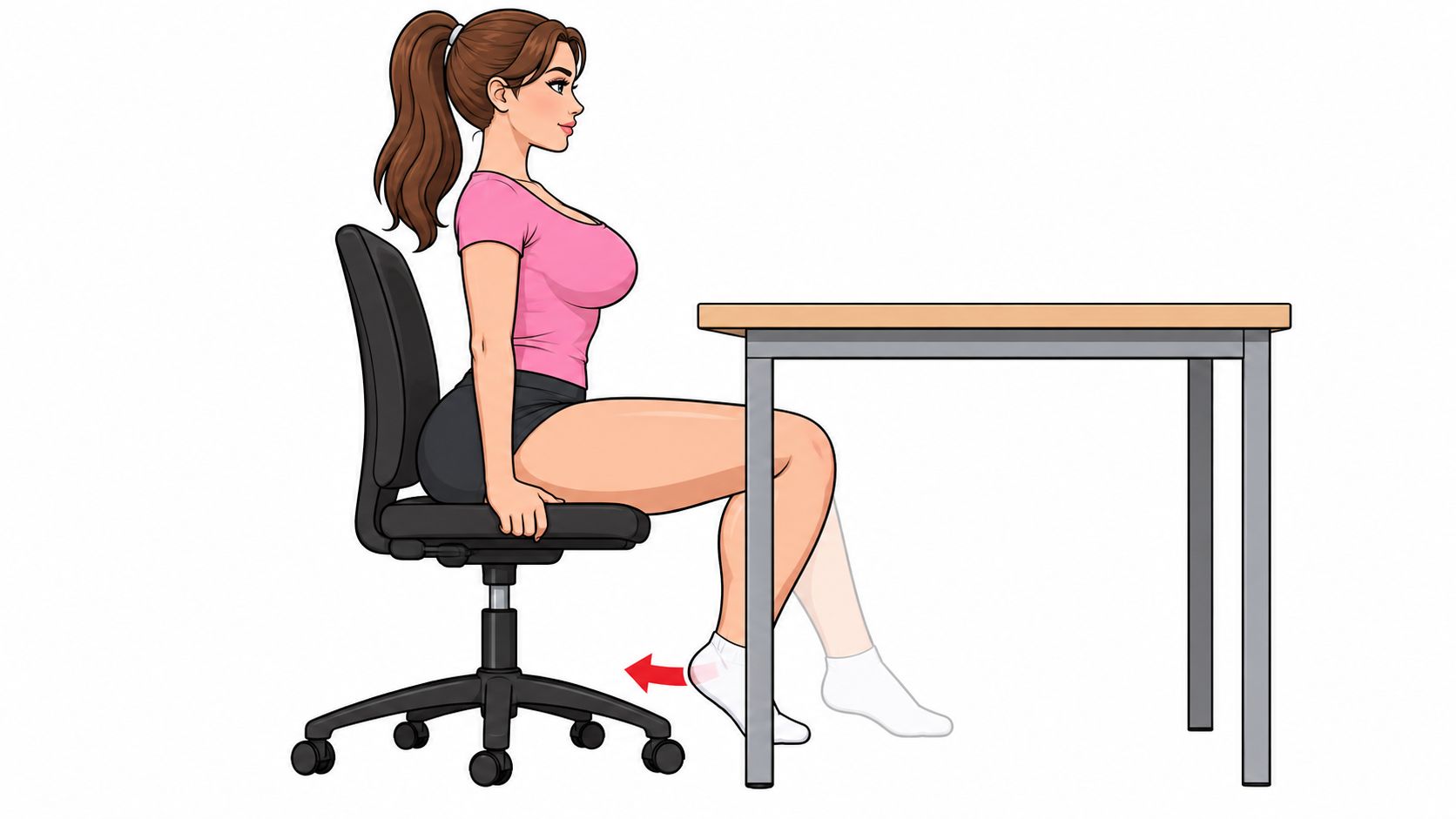
Heel slides depend on your floor more than the other movements here. A heel that glides easily gives you a mobility-focused movement; a little friction adds resistance. Too much friction makes you tug against the chair instead of controlling your leg.
Sit toward the middle of a stable seat with your back comfortably upright. Place a heel slightly forward, keep it in contact with the floor, and draw it back toward the chair. Then slide it forward again without forcing the knee straight.
Make the floor work for you
On a smooth hard floor, a folded towel beneath the heel can make the movement manageable. Keep the towel under your foot and out of walkways, and remove it when you finish. Don't use a slippery setup if your chair can roll or your supporting foot can slide.
To start easily, use a short range with little downward pressure. For more effort, press the heel gently into the floor as you pull backward, then control the return. More friction isn't automatically better: if you're rocking your trunk, reduce resistance or change the surface.
Try this after clearing a document from your review queue. Finish one side, switch sides, then log the repetitions along with a short note such as towel-assisted or light floor friction.
Those setup details matter because repetition totals alone won't describe the effort. A heel slide also has limits as a hamstring-strengthening exercise, especially for an already-active person. Use it as a convenient snack rather than assuming it replaces progressively loaded hamstring work away from the desk.
5. Isometric Thigh Squeeze
A folded towel makes this a discreet option when there isn't room to move your legs forward. Place it between your knees, sit with your feet supported, and squeeze inward gently. Maintain the pressure while breathing normally, then release it fully before repeating.
The primary action is an inner-thigh contraction, not a reason to clamp your knees together as hard as possible. Choose a towel thickness that lets your legs remain in a comfortable position. A yoga block can work, but a hard edge pressing into the knees is an unnecessary distraction.
Treat the release as part of the exercise. Holding a low-level squeeze throughout a meeting isn't the same as completing deliberate contractions and rests.
For a beginner, use light pressure and brief holds. Increase difficulty by maintaining a steadier contraction for longer, not by holding your breath or straining through the hips. If the exercise causes groin discomfort, stop and choose another movement.
Log time, not imaginary repetitions
Record the accumulated hold time, or use the same hold-and-release pattern each time and record completed squeezes. Pick a method you can repeat consistently. Don't compare a brief gentle squeeze with a much longer hard hold as though they were identical work.
A practical trigger is the pause before joining a call. Finish the contractions before the conversation begins so you can pay attention to both your breathing and the meeting.
This movement is sometimes presented as universally suitable because it's quiet and simple. It isn't a substitute for individualized pelvic-health or rehabilitation advice. If you're recovering from surgery, managing pelvic symptoms, or following a clinician's programme, use the exercises and restrictions you've been given rather than adding a hard squeeze on your own.
6. Seated Torso Twists
After a stretch of leaning toward a screen, start with a posture reset rather than immediately chasing a deeper twist. Place your feet flat, bring your ribs comfortably over your pelvis, and relax your shoulders. Cross your arms loosely over your chest, then rotate your upper body gently to either side.
Keep your pelvis facing forward and move through a range you can control. Don't pull hard against the chair arms to force extra rotation. If your swivel chair turns with you, use a fixed chair instead.
Progress through control, not force
- Make it easier: Keep the turn small and return fully to the centre between sides.
- Make it harder: Slow the movement and briefly pause at the comfortable end of your range.
- Record it accurately: Log controlled rotations as mobility work, not as a demanding abdominal-strength set.
Use this snack after finishing a concentrated writing task, with your hands away from the mouse. Our bent-leg body twist guide describes a separate twisting movement; don't assume the positions or ranges are interchangeable.
A stretch sensation isn't permission to push through pain. Stop if you develop sharp, radiating, or worsening symptoms. If rotation doesn't suit you, reset your posture and choose a comfortable non-twisting movement instead.
The JMIR Research Protocols exercise-snack protocol describes an evidence base still developing around brief activity breaks and musculoskeletal outcomes. That's a reason to stay cautious about promises that a desk routine will fix back or neck discomfort.
Treat torso twists as optional mobility work. They should leave you comfortable enough to resume your day, not create symptoms you spend the afternoon trying to stretch away.
7. Seated Hip Abduction Press
The hip abduction press gives you resistance without needing much floor space. Sit with your feet planted and place your hands against the outside of your knees. Push your knees outward gently while your hands resist, then release without letting the legs snap inward.
Keep your torso tall and your pelvis still. The movement should come from pressing the thighs apart, not rolling onto the outside edges of your feet. Stop short of any pinching sensation in the hips.
Use the demonstration to orient yourself before setting up your own controlled version.
Hands first, band later
Hand resistance is easy to adjust and requires no equipment. A light loop band above the knees provides a more repeatable setup once the movement feels comfortable. Position it away from the knee joint and inspect it for damage before use.
Start with gentle outward pressure and a short hold. To progress, sustain the pressure longer or use a slightly more resistant band while keeping the same posture. Don't increase resistance and sacrifice range just to call the exercise harder.
This snack fits after you return from a kitchen break and before you reopen your work. Record the hold duration and whether you used hands or a particular band. Keep band descriptions consistent so you can recognize comparable sets later.
The hip abductors work here, but a seated press doesn't test the same control as standing on one leg or moving through a squat. Use it as a convenient addition, not proof that you've addressed every aspect of hip stability. Stronger users will eventually need more demanding exercises outside the chair.
8. Under-Desk Isometric Press
Check the desk before pressing against it. Skip this exercise if the surface is lightweight, glass, loose, foldable, or liable to tip. A height-adjustable desk also isn't something to use as a resistance machine unless its construction safely supports the pressure.
On a sturdy, immovable desk, place your palms against the underside with your elbows comfortably bent. Apply gentle upward pressure without lifting the desk, shrugging your shoulders, or bending your wrists sharply. Breathe throughout the hold, then gradually release.
Safety boundary: If the desk shifts, creaks, or tilts, stop. The furniture isn't training equipment.
Begin with light pressure so you can assess your wrists and shoulders. Make the snack harder by sustaining a controlled contraction, not by attempting a maximal lift. If the position irritates your wrists, choose a different exercise rather than forcing a flat palm beneath an awkward surface.
Keep the claim modest
This is an upper-body isometric effort, but the muscles emphasized depend on your arm position and the direction of pressure. It isn't automatically equivalent to a push-up or a balanced upper-body routine. A comfortable wall press away from the desk may be a better choice when the furniture or joint position isn't suitable.
Use the snack between tasks, not during precision work. Controlled workstation research has examined movement alongside work tasks, but its findings depend on the activity and task being performed, as described in this workstation exercise study.
Log hold duration and a simple effort description. Don't invent a repetition count for a continuous contraction, and don't mistake pressing harder against an unsuitable desk for meaningful progression.
Under-Desk Exercises at a Glance
| Exercise | Primary Muscles | Equipment Needed | Discretion Level | Best For |
|---|---|---|---|---|
| Seated Leg Extensions | Quadriceps | Chair and desk space | Very discreet; can go unnoticed | Leg strength and knee stability |
| Seated Calf Raises | Calves | None | Very discreet and silent | Lower-leg movement during long periods of sitting |
| Seated Marches | Hip flexors and core | Chair | Discreet when kept small and quiet | Gentle cardio and breaking up sedentary periods |
| Seated Hamstring Curls (Heel Slides) | Hamstrings | Chair and floor space | Discreet under a desk | Hamstring activation and balancing leg strength |
| Isometric Thigh Squeeze | Inner thighs and glutes | Towel or yoga block | Extremely discreet; no visible movement | Strength activation without joint movement |
| Seated Torso Twists | Obliques and spinal rotators | Chair | Discreet, with minimal space needed | Back mobility and posture resets |
| Seated Hip Abduction Press | Hip abductors and gluteus medius | Resistance band or hands | Discreet while seated | Hip and knee stability |
| Under-Desk Isometric Press | Chest, shoulders, and triceps | Sturdy desk | Very discreet; no visible movement | Upper-body engagement at a desk |
Turning Under-Desk Moves Into a Daily Habit You Can See
Pick a small rotation rather than trying every movement at once. Choose a leg movement, a second exercise that feels different, and a comfortable mobility option. Anchor each to something that already happens, such as finishing your morning email, returning from lunch, or closing your final call.
Log immediately after the set. Record repetitions for moving exercises and duration for holds, keeping the variation consistent enough to compare later. A harder band, longer pause, or slower lowering phase changes the work even when the repetition count stays the same.
Build a rhythm you can maintain
- Keep the starting goal modest: Choose an amount you can finish without rearranging the workday.
- Separate movement from training: Keep taking ordinary walking breaks even on days without a planned strength session.
- Progress selectively: When a set feels easy, change the resistance, control, or duration before adding more exercises.
Consistency needs attention after the novelty fades. In a PLOS ONE study of office workers using DeskCycle, daily use in the first intervention phase fell from an early peak of 84% to 49.4% by week 8. That's a practical reason to track completed activity instead of relying on enthusiasm.
SuperStrong is our iPhone app for logging bodyweight sets as tiles on a shared wall with up to four friends. Larger repetition totals create larger tiles, and personal bests receive a NEW PR badge. Our plan uses three training days and four rest days, with small suggested goals drawn from your past sets; move to a harder week when the current week feels easy.
Use the wall for the exercises available in the app rather than assuming every desk variation has its own entry. SuperStrong is a log, not a coach or medical advice. Check with a doctor before starting a new exercise programme, particularly if symptoms or an existing condition affect how you move.
SuperStrong turns short bodyweight sets into a visible record you can share with a small group of friends. Visit SuperStrong to start your wall, choose a modest goal, and give the sets you complete between daily tasks somewhere to count.